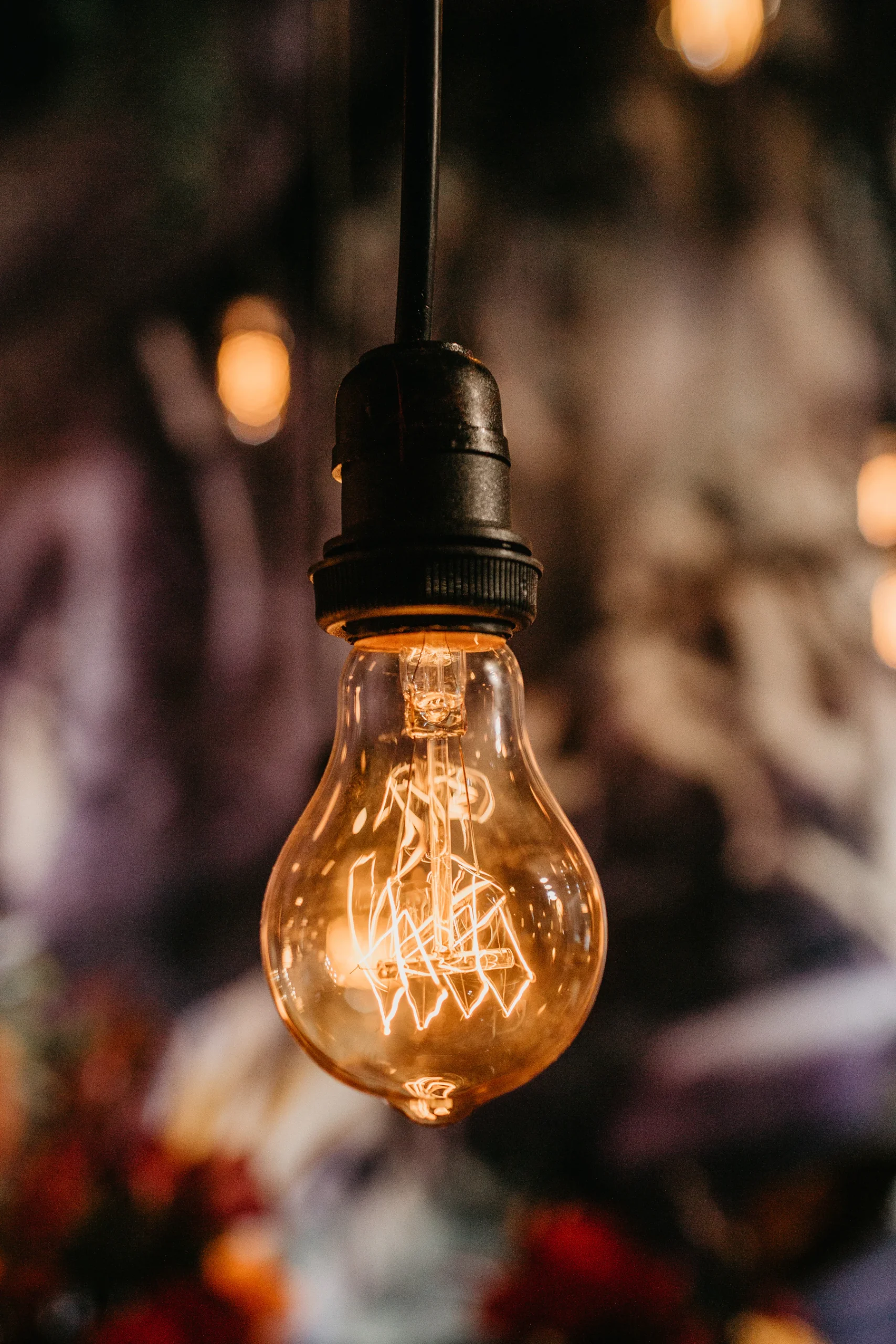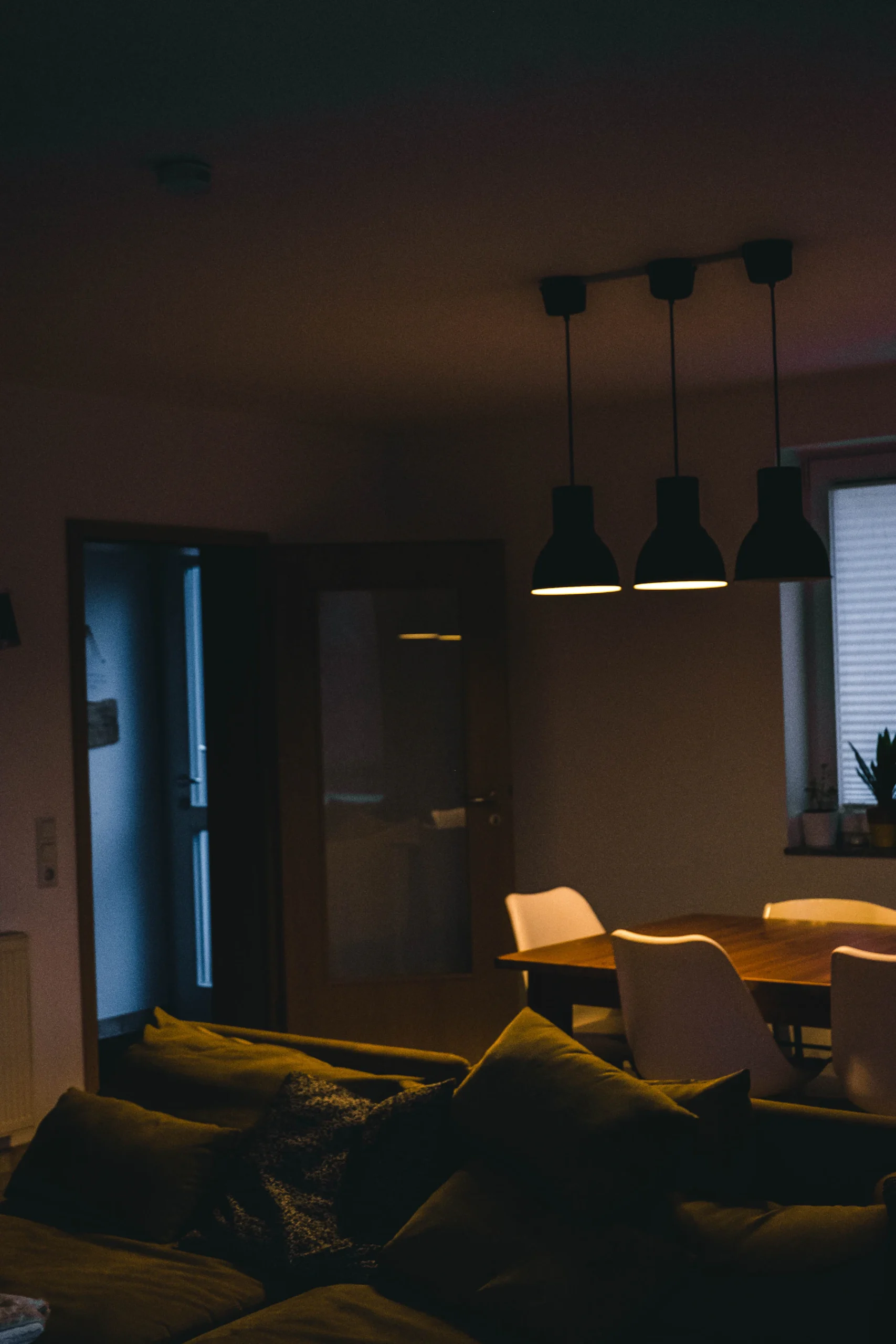
A single overhead fixture lights a room the way a flashlight lights a stage: flat, harsh and unflattering. It casts shadows under eyes, leaves corners in gloom and makes even a beautiful room feel like an office after dark. The fix is what lighting designers call layering: combining several kinds of light from several heights, each with its own job.
The three layers
1. Ambient light
The general, overall illumination that lets you see and move safely. It might come from a chandelier, flush-mount fixtures, recessed lights, cove lighting or, in the daytime, windows. Ambient light should be soft and even, not a single blinding point.
2. Task light
Focused light for specific activities: reading, cooking, shaving, sewing, paying bills. Reading lamps beside chairs, under-cabinet lights in the kitchen, pendants over an island, vanity lights at face height beside a mirror.
3. Accent light
Light that creates drama and draws the eye: picture lights on art, uplights behind plants, lit display cabinets, wall washers on stone. Accent light is typically about three times brighter than the ambient light around it, which is why it makes things pop.
Why layering works
Our eyes read depth from contrast and shadow. A room lit evenly from a single point looks flat. A room lit in layers has pools of light and soft shade, so it looks deeper, warmer and more inviting. Layers also let you change the mood: bright and practical for a dinner party clean-up, low and glowing for a quiet evening.
Dimmers are not optional
A dimmer is the cheapest luxury in lighting. It turns one fixture into many: full brightness for cleaning, half for dinner, a soft glow for conversation. Put ambient and accent lighting on dimmers wherever you can, and make sure your LED bulbs are labeled “dimmable” and compatible with the dimmer switch.
Sizing and hanging fixtures
- Chandelier diameter for a room: add the room’s length and width in feet; the sum is a good diameter in inches. A 14 × 12 room suggests a fixture about 26 inches across.
- Over a dining table: a fixture one-half to two-thirds the width of the table, with the bottom about 30 to 36 inches above the tabletop for an 8-foot ceiling (add about 3 inches for every additional foot of ceiling).
- In walkways and entries: keep the bottom of a hanging fixture at least 7 feet above the floor.
- Pendants over an island: usually 30 to 36 inches above the counter, spaced so they are evenly distributed and don’t crowd the ends.
- Table lamps: the bottom of the shade near eye level when seated, roughly 38 to 42 inches from the floor, so you see light, not bulb.
Try the chandelier calculator for your room.
Room by room
- Living room: dimmable ambient light, plus lamps beside seating, plus accent light on art or a fireplace.
- Kitchen: recessed or flush ambient light, under-cabinet task lighting (the most important layer), pendants over the island, and perhaps lighting inside glass cabinets.
- Bedroom: soft ambient light, reading lights for each side of the bed, and a low night-light path to the bathroom.
- Bathroom: light from the sides of the mirror at face height. Overhead light alone casts shadows under your eyes.
- Dining room: a dimmable chandelier as the focal point, with sconces or a buffet lamp so the chandelier doesn’t have to do everything.
Planning ahead
Layered lighting is easiest to get right on paper, when outlets, switches and junction boxes can go exactly where lamps, sconces and pendants belong, including floor outlets for floating furniture. It’s one of the most valuable parts of a plan review. In an existing home, a good electrician (Von works with trusted local ones) can add circuits, dimmers and sconces with less disruption than you might expect.
The takeaway
Light the activities, light the architecture and light the mood, from several heights, on dimmers. Layered light is the difference between a room you can see in and a room you want to be in.