Walk through almost any home and you’ll see it: paintings floating up near the ceiling, as if they were trying to escape. Art hung too high disconnects from the furniture, forces people to crane their necks and makes rooms feel disjointed. There’s a simple standard museums and galleries use, and it works at home too.
The 57-inch rule
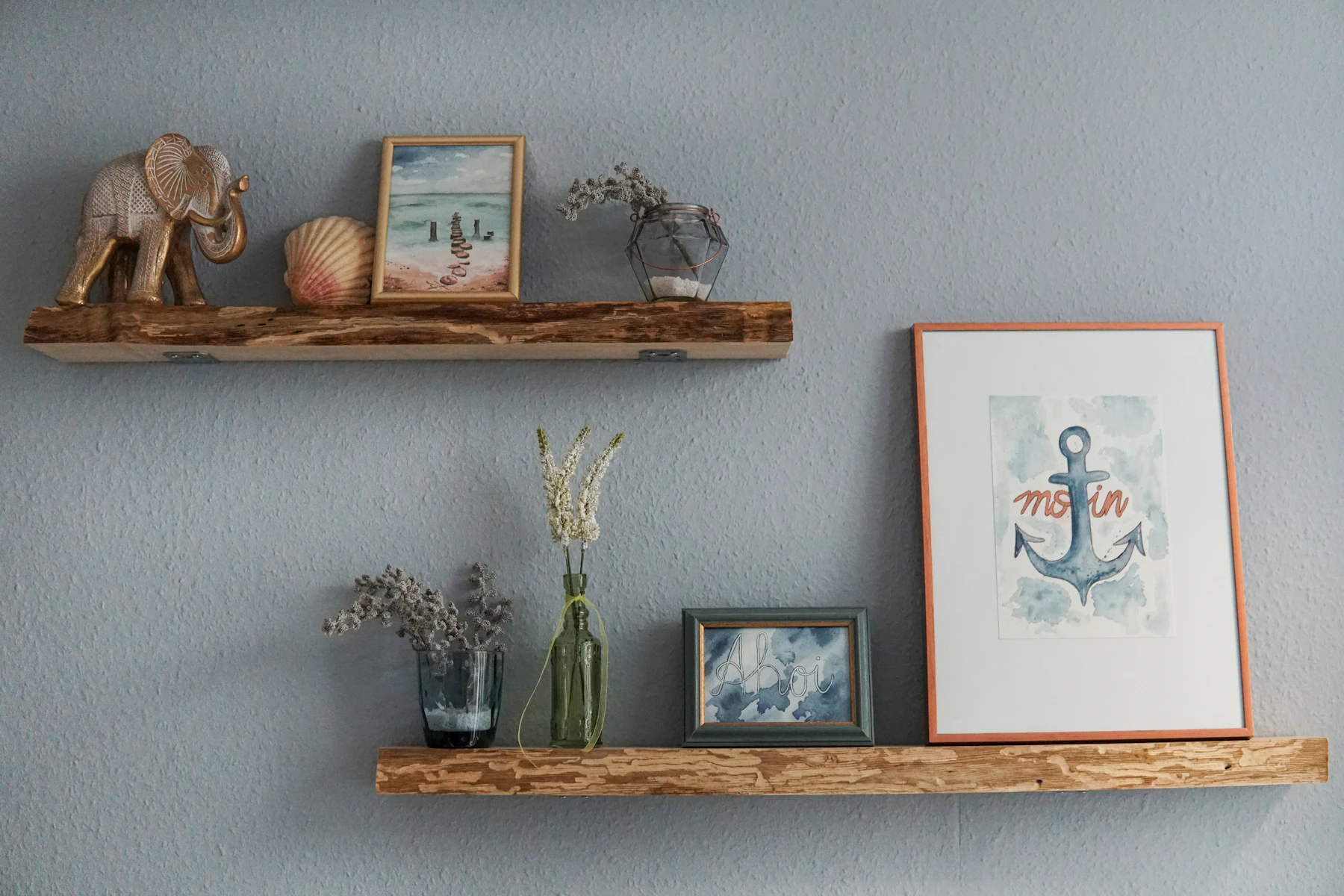
Hang art so that its center is about 57 inches from the floor (some designers use 57 to 60). That is roughly the average adult’s eye level when standing. Because the rule uses the center, it works for any size of artwork, and it keeps every piece in a room or hallway on a consistent line.
Finding the nail
- Measure the height of the frame and divide by two.
- Pull the hanging wire taut toward the top of the frame and measure from the wire to the top edge. That’s the “drop.”
- Nail height = 57 + (frame height ÷ 2) − drop.
Example: a 24-inch-tall frame with a 3-inch drop goes on a nail at 57 + 12 − 3 = 66 inches. Or let the picture-hanging calculator do the arithmetic.
Above furniture, the rule changes
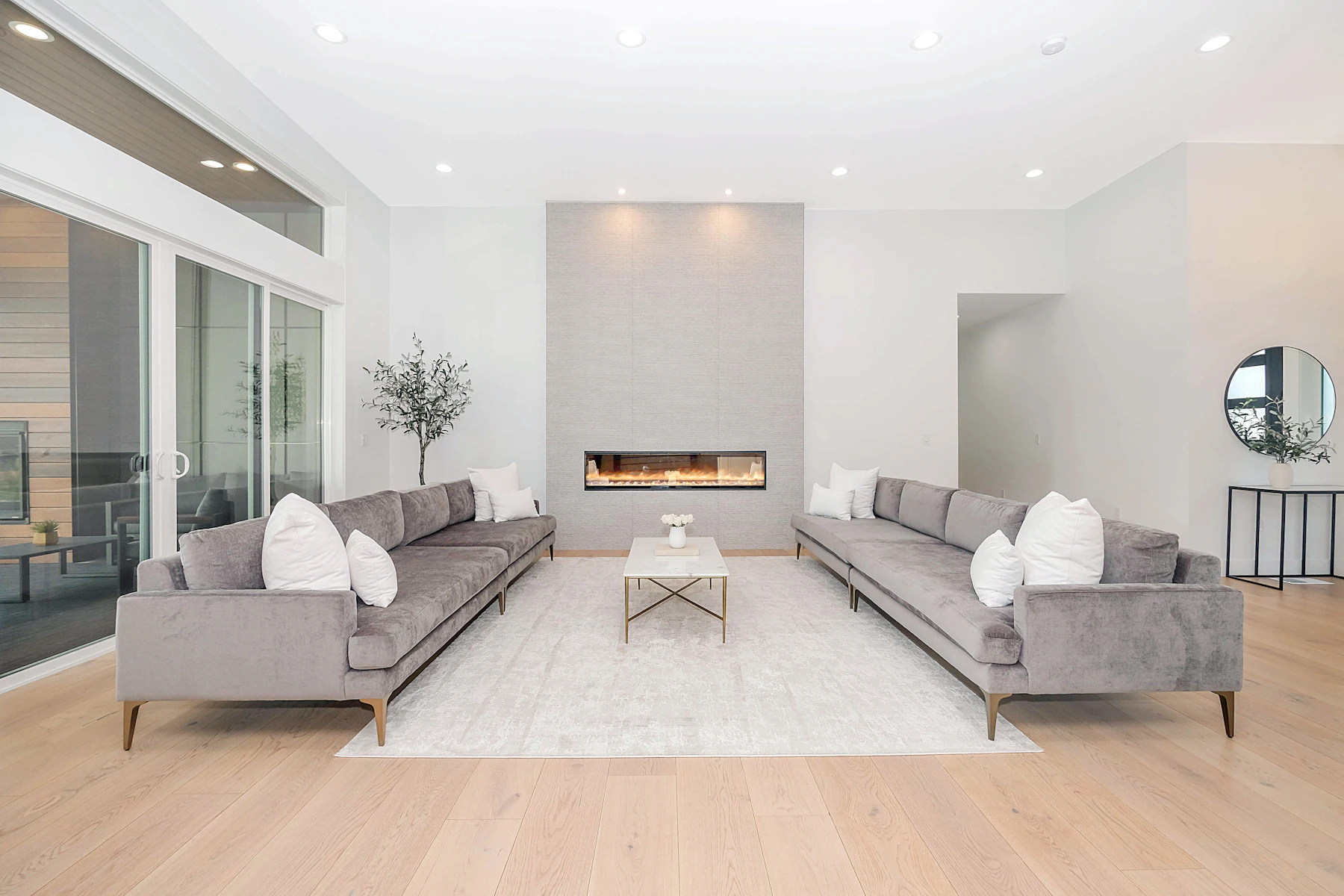
When art hangs over a sofa, console, sideboard, bed or mantel, relate it to the furniture rather than the floor. The art and the furniture should read as one composition.
- Gap: leave about 8 to 10 inches between the top of the furniture (or sofa back) and the bottom of the frame. More than about 12 inches and the art floats away.
- Width: art (or a grouping) about two-thirds the width of the furniture beneath it. Too narrow looks timid; wider than the furniture looks top-heavy.
- Above a bed: 6 to 12 inches above the headboard, scaled to the width of the bed.
- Above a mantel: start 6 to 10 inches above the mantel shelf. A mantel is already high, so prioritize connection over strict eye level.
Gallery walls
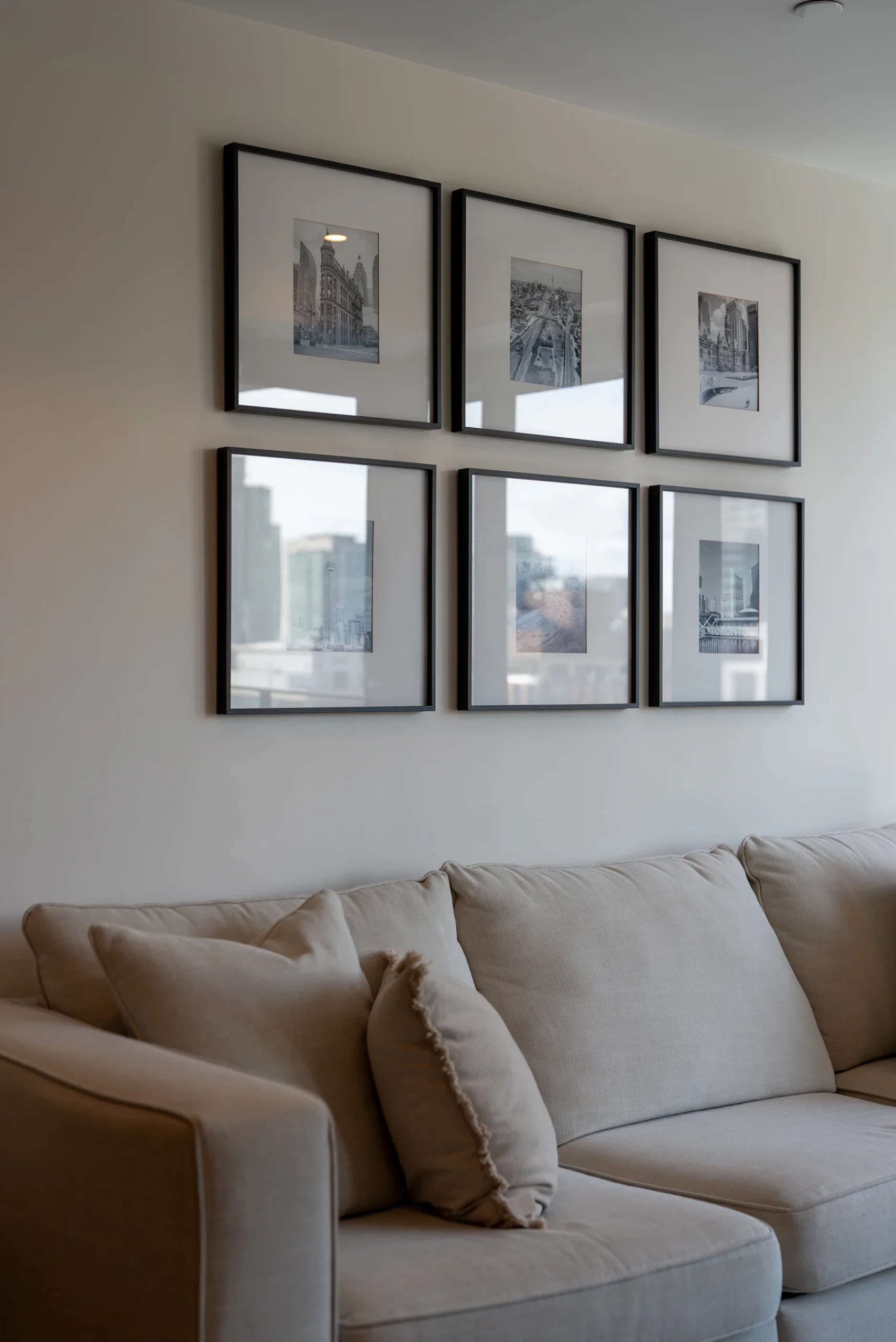
A gallery wall is a group of pieces that reads as one large artwork, so treat the whole group as a single frame:
- Center the entire group at 57 inches (or relate it to the furniture below).
- Keep the spacing between frames consistent, usually 2 to 3 inches. Tight spacing holds the group together.
- Create a unifying element: matching frames, matching mats, a shared color palette or a consistent theme.
- Place the largest piece first, slightly off-center, and build around it.
- Lay everything out on the floor first, then trace each frame on kraft paper and tape the paper to the wall before you hammer a single nail.
Stairs, hallways and tall walls
On a staircase, keep the center of each piece about 57 inches above the step directly beneath it, so the group climbs at the same angle as the stairs. On a very tall wall, such as a two-story great room, it is fine to hang larger art higher or stack pieces, but keep the lowest piece connected to the furniture or eye level so the arrangement feels grounded.
Lighting your art
Art earns its keep after dark only if it’s lit. Picture lights, adjustable recessed spots aimed at about 30 degrees, or a pair of lamps nearby all work. Use warm, high-CRI bulbs so colors look true, and keep valuable works out of direct sunlight.
The takeaway
Lower your art. Center it at 57 inches, or 8 to 10 inches above the furniture below, size it to about two-thirds the width of that furniture, and treat groupings as one piece. It is a ten-minute change that can make a room look professionally finished.