If we could change one thing in most American living rooms, it would be the rug. Specifically, its size. The classic mistake is a small rug floating in the middle of the room with all the furniture arranged around it, not on it. It looks like a postage stamp, chops the floor into pieces and, oddly, makes the room look smaller.
Rugs are usually bought too small for an understandable reason: big rugs are expensive, and in the store a 5 × 8 looks enormous. At home, it rarely is.
What a rug is for
A rug’s design job is to unify a group of furniture, defining a “room within a room.” When the furniture sits on (or at least touches) the rug, the group reads as one composed arrangement. When the furniture surrounds a too-small rug, each piece looks isolated.
Living rooms
There are three accepted arrangements, from most to least generous:
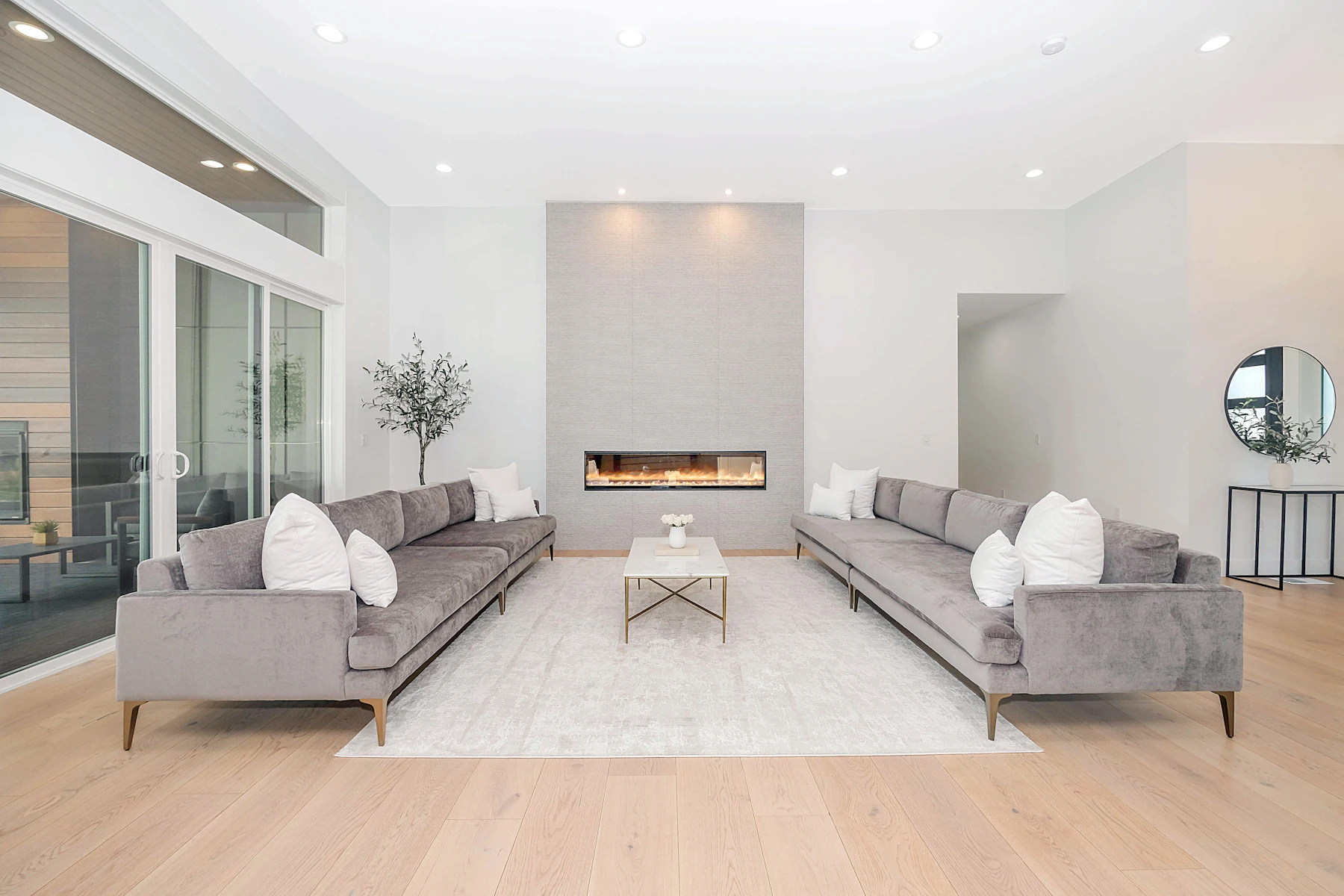
- All legs on. Every piece of the seating group sits entirely on the rug. Luxurious, and best in large or open-plan rooms where the rug defines a zone.
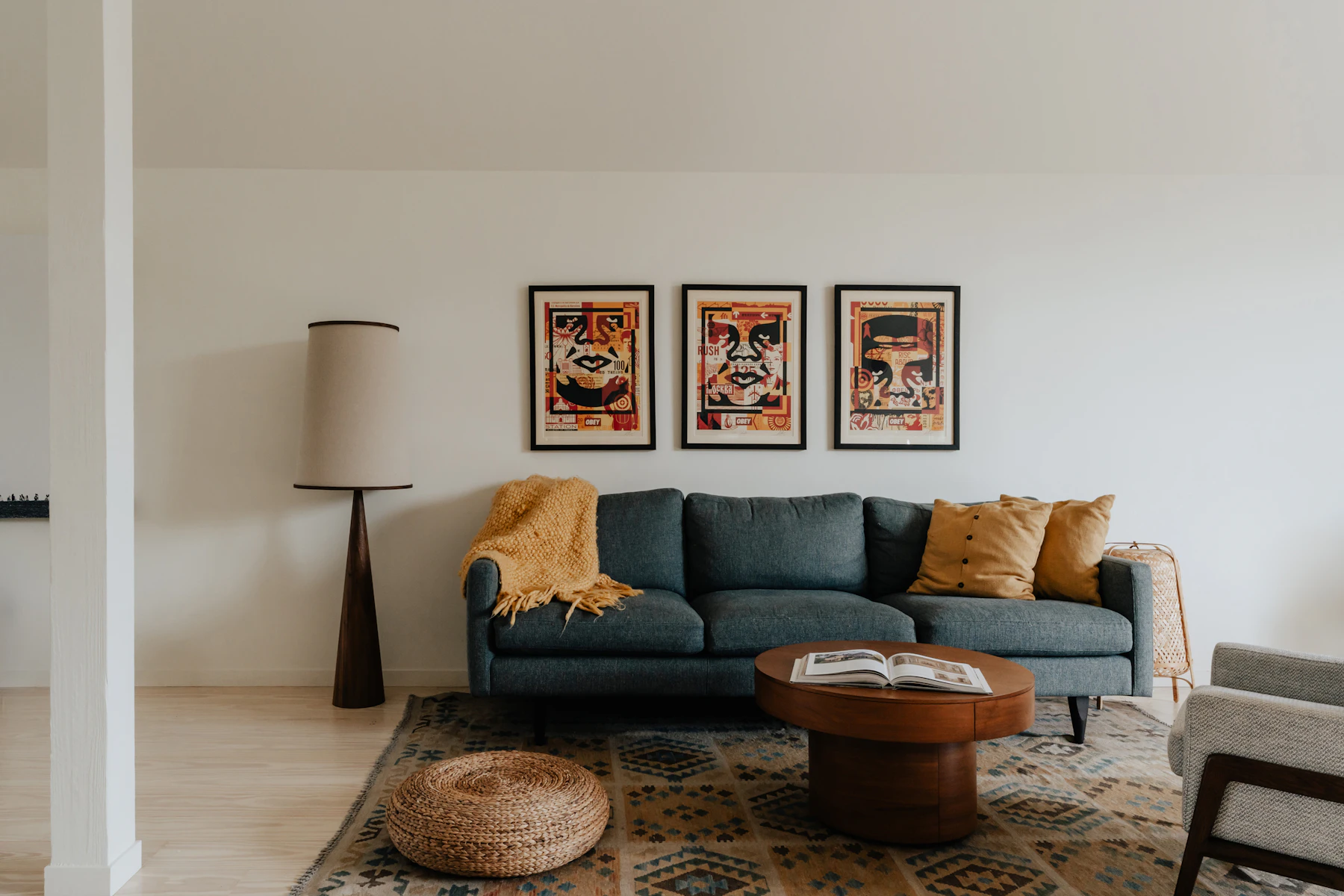
- Front legs on. The front legs of the sofa and chairs rest on the rug; back legs on the floor. The most common and practical choice, and it still ties everything together.
- Coffee-table-only. A small rug under the coffee table only. This rarely looks intentional. Avoid it unless the room is tiny, or layer a smaller patterned rug over a larger plain one.
In practice, that means most living rooms need an 8 × 10 or 9 × 12, and large great rooms a 10 × 14 or bigger.
Dining rooms
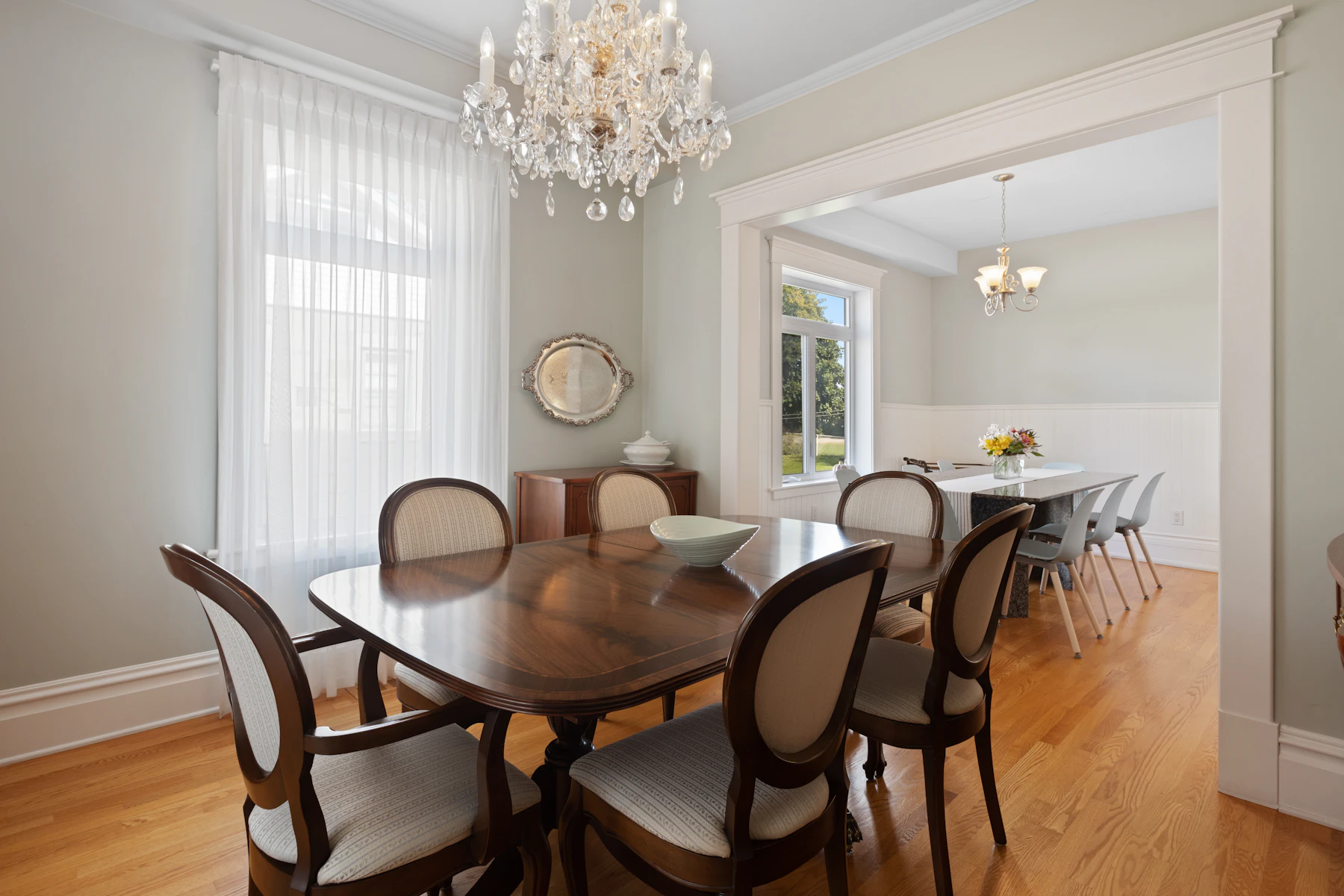
The rug must be big enough that chairs stay on it when pulled out. Otherwise chair legs catch on the edge every time someone sits down. Measure the table and add about 24 inches on every side (some designers prefer 30). A 72 × 40 inch table needs a rug of roughly 10 × 8 feet.
Round table? Use a round rug with the same 24-inch allowance, or a square one.
Bedrooms
The rug should extend beyond the sides of the bed so your feet land on something soft in the morning, about 18 to 24 inches on each side for a queen or king.
- Queen bed: usually an 8 × 10, placed horizontally under the lower two-thirds of the bed, starting just in front of the nightstands.
- King bed: a 9 × 12 placed the same way.
- Alternative: a pair of runners on either side of the bed.
Halls and entries
Runners should leave a few inches of floor showing on each side and stop short of the ends of the hall by 6 to 12 inches. In entries, make sure the front door clears the rug when it opens. Choose a low pile.
Standard sizes, and when to go custom
Common sizes: 2 × 3, 3 × 5, 4 × 6, 5 × 8, 6 × 9, 8 × 10, 9 × 12, 10 × 14, 12 × 15 and 12 × 18 feet. If your room falls between sizes, round up rather than down. A slightly too-large rug almost always looks better than a too-small one. For unusual rooms, broadloom carpet can be cut and bound to any size at a reasonable cost, and natural-fiber rugs (sisal, jute, seagrass) offer big sizes affordably; layer a smaller vintage rug on top for color.
Don’t forget the rug pad
A good pad keeps the rug from slipping (a real safety issue), protects floors, adds cushion and extends the rug’s life. Size it about an inch smaller than the rug on all sides.
The takeaway
Buy bigger than you think. Let the furniture sit on the rug, leave a consistent border of floor, and give dining chairs room to slide. Try the rug size finder with your room’s measurements.