Walk into a room that feels “off” and, nine times out of ten, the problem isn’t the sofa or the paint color. It’s that nothing is in charge. The eye bounces from the television to the window to a busy bookcase and never lands. The room feels restless, even when it is tidy.
A focal point is the one element your eye goes to first: a fireplace, a view, a large piece of art, a bed with a handsome headboard. It organizes everything else. Designers lean on it because it solves several problems at once.
Why focal points work
Human vision looks for a starting point. In any scene we look first at what is largest, brightest, highest in contrast or most centered, then move outward. When a room offers one clear starting point, the brain reads the space as calm and intentional. When it offers five competing ones, the room reads as clutter, even if every object is lovely on its own.
A focal point also gives the furniture a reason to be where it is. A sofa facing a fireplace makes sense. A sofa facing nothing in particular looks like it was dropped off by the movers.
How to find your room’s focal point
Start with what the architecture gives you. In order of preference:
- A view. In North Idaho, a window onto the lake, the mountains or the trees is the best focal point money can’t buy. Arrange to look at it, and don’t block it.
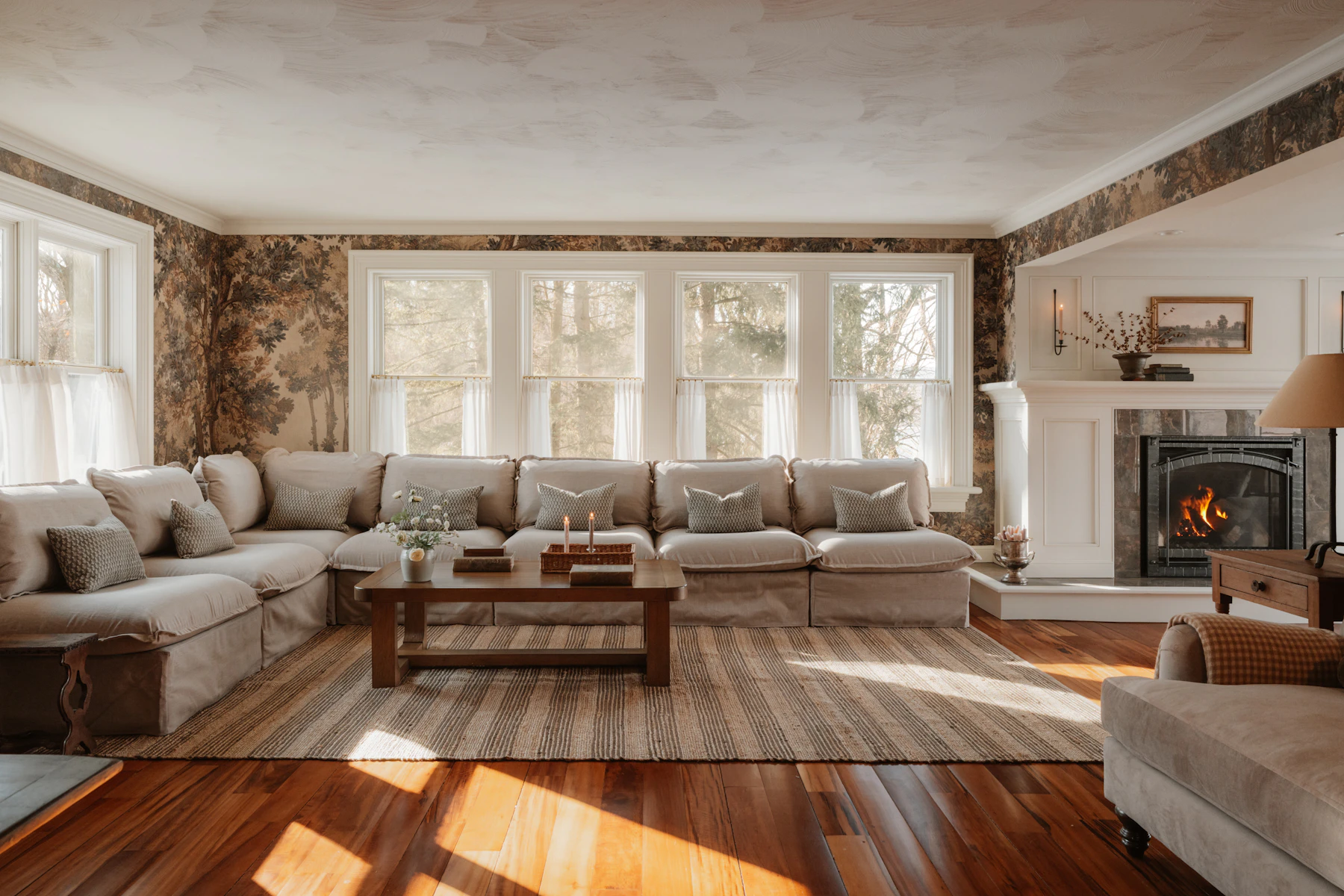
- A fireplace. The traditional anchor of a living room, with warmth, symmetry and a mantel to style.
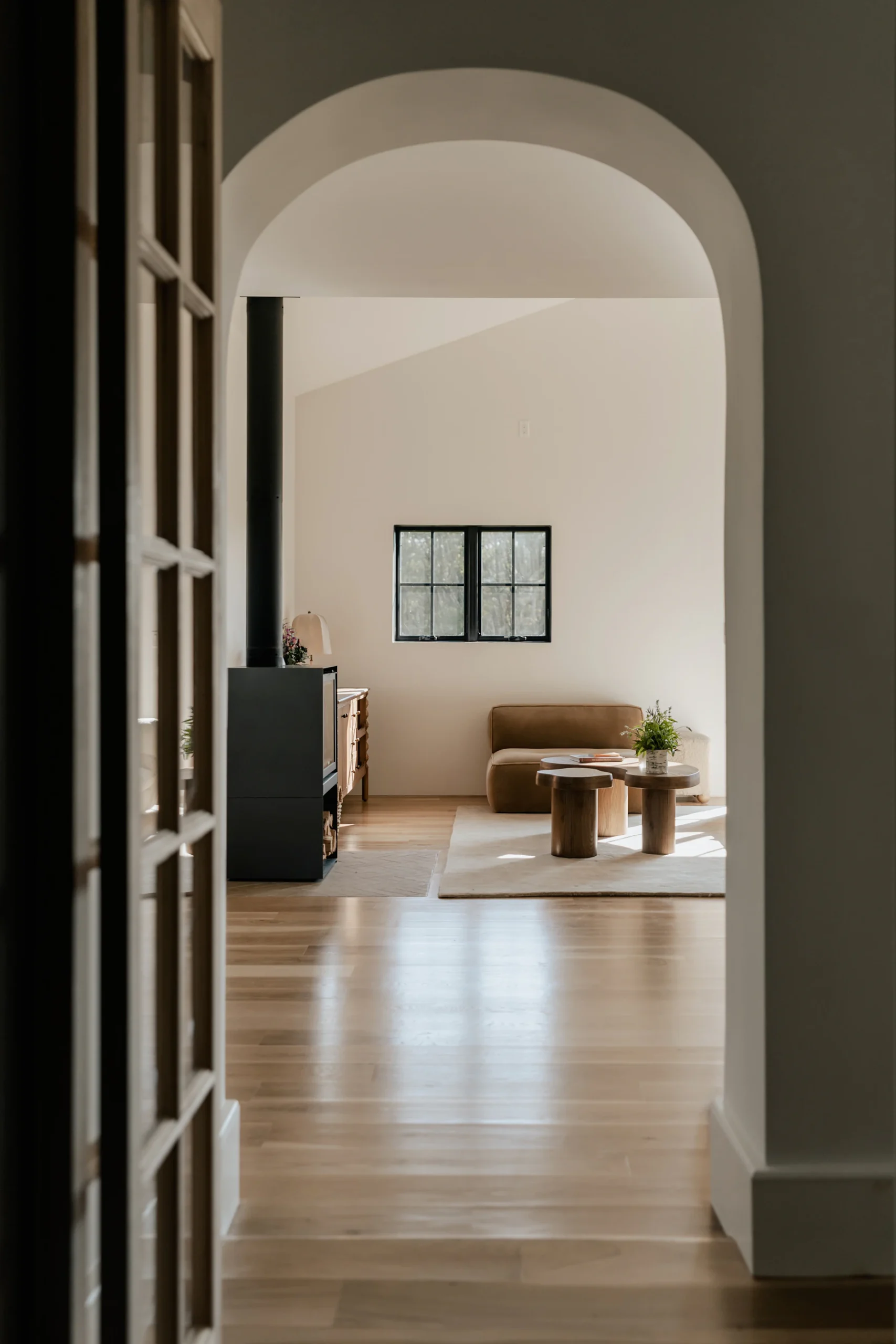
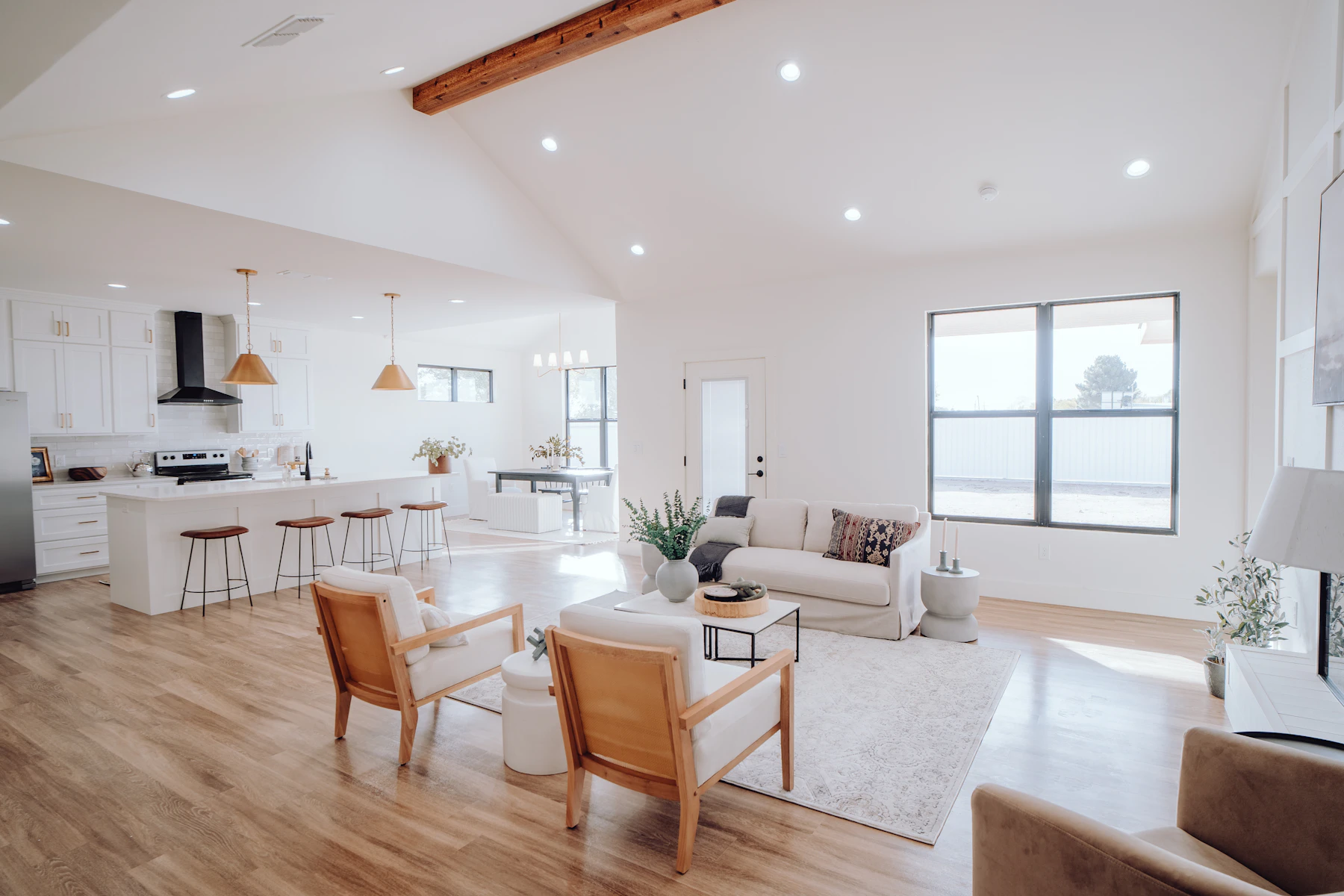
- An architectural feature. A dramatic staircase, a bay window, built-in bookcases, a beamed or vaulted ceiling.
- The bed or the dining table. In bedrooms and dining rooms, the main piece of furniture is the natural focus. Give it a strong headboard or a striking chandelier.
If the room offers none of these (a plain box with a door and a window), you create one.
Creating a focal point from scratch
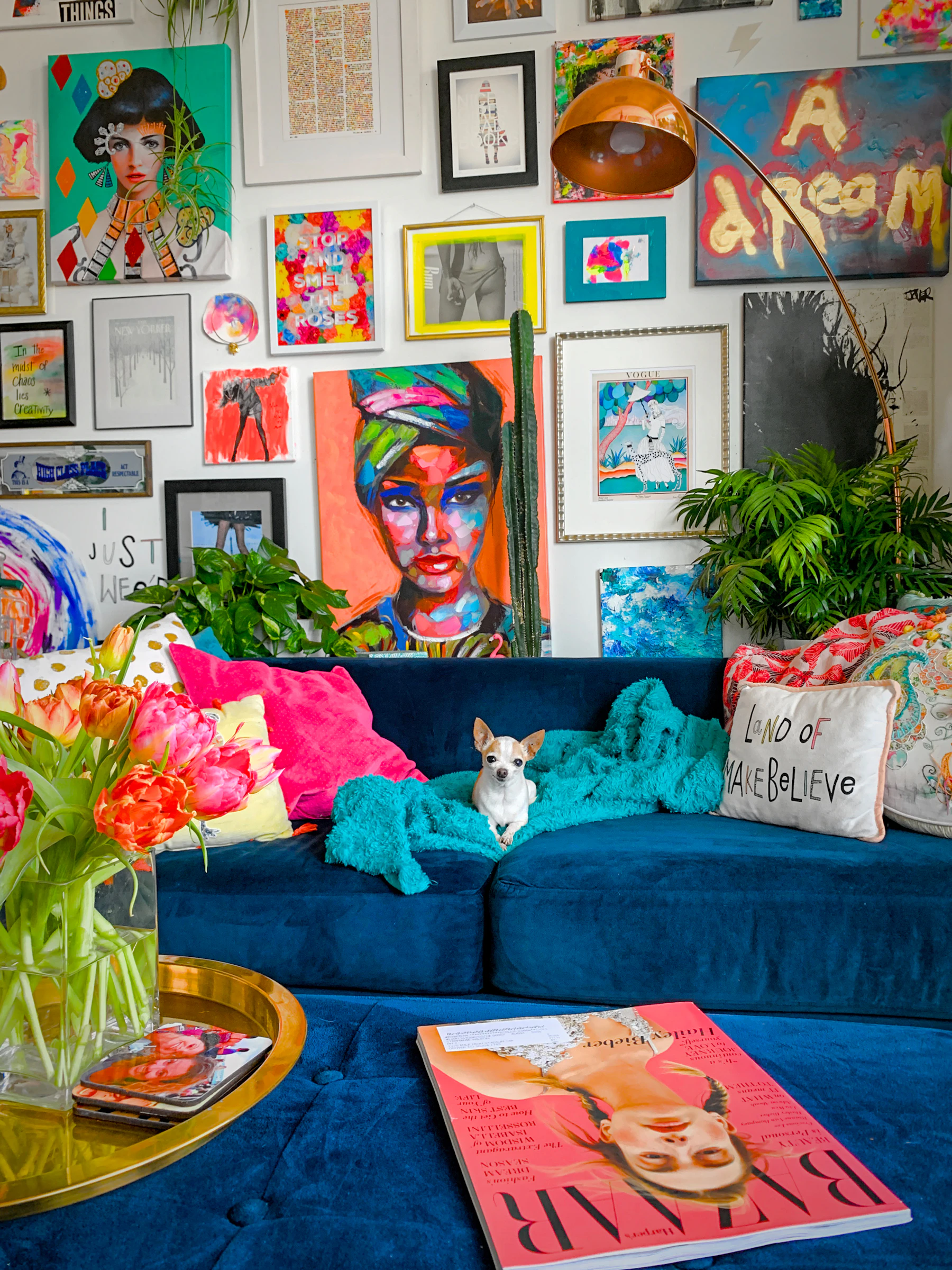
- Large art. One generous piece, or a tight gallery grouping that reads as a single unit, on the wall opposite the entry.
- An accent wall. A deeper paint color, wallpaper or paneling on one wall draws the eye. Choose the wall you want people to look at, usually the one facing the door or behind the sofa or bed, not just the one that’s easiest to paint.
- A statement piece of furniture. An antique armoire, a sculptural chair, a dramatic headboard. (Von once filled a showroom corner with a chaise framed entirely in horn; nobody walked past it.)
- Light. A chandelier or a pair of wall sconces flanking a mirror creates a focal point that glows at night.
Arranging the room around it
Once the focal point is chosen, everything else supports it:
- Orient the main seating toward it, or at a slight angle to it, so it is in view from the most-used seats.
- Use symmetry near the focal point: matching lamps on a mantel, chairs flanking a fireplace, nightstands on either side of a bed. Symmetry says this is important.
- Keep competing elements quieter. If the art over the fireplace is bold, let the bookcase be calm, with fewer objects, more books and a restrained palette.
- Light it. A picture light, a ceiling spot or a pair of lamps keeps the focal point working after dark.
When a room has two focal points
The classic dilemma: the fireplace is on one wall and the view, or the television, is on another. You have three good options.
- Combine them. Mount the TV above or beside the fireplace (watch the height; above a mantel can strain necks) so there is one destination.
- Angle the seating so both are comfortably visible, often with an L-shaped arrangement or a pair of swivel chairs.
- Divide and rule. In a large room, create two zones: a conversation area facing the fireplace and a separate reading or media area facing the window or screen. Each zone gets its own focal point and its own rug.
What you shouldn’t do is ignore the question. A room that can’t decide what it is about will never feel settled.
The takeaway
A focal point isn’t a decorating trick; it’s how people read space. Pick one, honor it with your furniture arrangement and lighting, and quiet whatever competes with it. It is often the single fastest way to make a room feel designed, and it costs nothing if you already own the fireplace, the view or the painting.
Not sure what your room’s focal point should be? That question comes up in almost every consultation, and the answer is usually standing in plain sight.